
We Ignore ROAS as an Account-Level Metric, and So Should You
.png)
Every few months a founder says some version of the same sentence to us: "We know 10 is a good ROAS. But we're not growing."
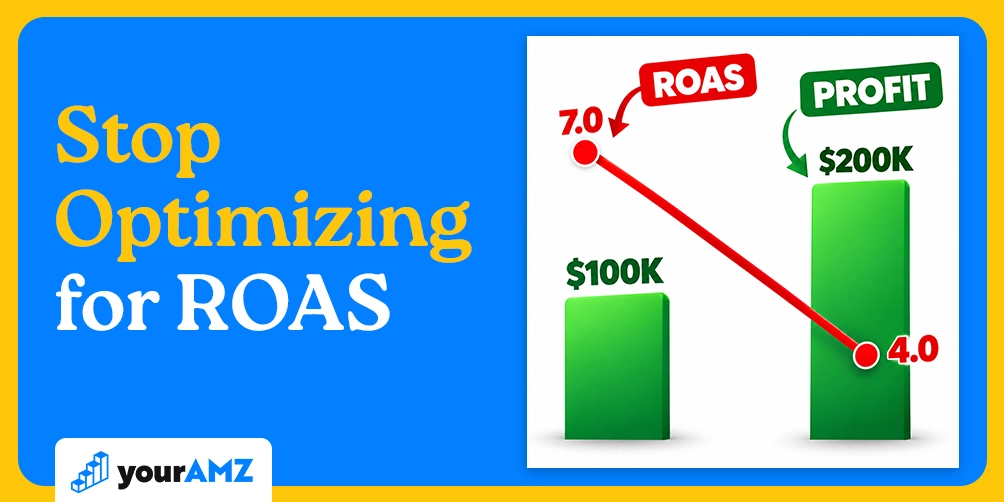
The most recent was a premium home goods brand doing $100-200K per month on Amazon (identifying details changed). Their website was growing 150% year over year. Amazon tracked dead even with the previous year, month after month, while the ad account posted a 10 ROAS that everyone agreed was excellent.
The dashboard looked healthy and the channel was stuck at the same time, a combination that confuses smart operators because ROAS was never built to answer the question they're asking of it.
This post covers what ROAS actually measures, the branded-search math that inflates it, why TACoS is the number an ad account should be run on, and what happened when we took that brand's ROAS from 10 down to 4 on purpose.
What does ROAS actually measure?
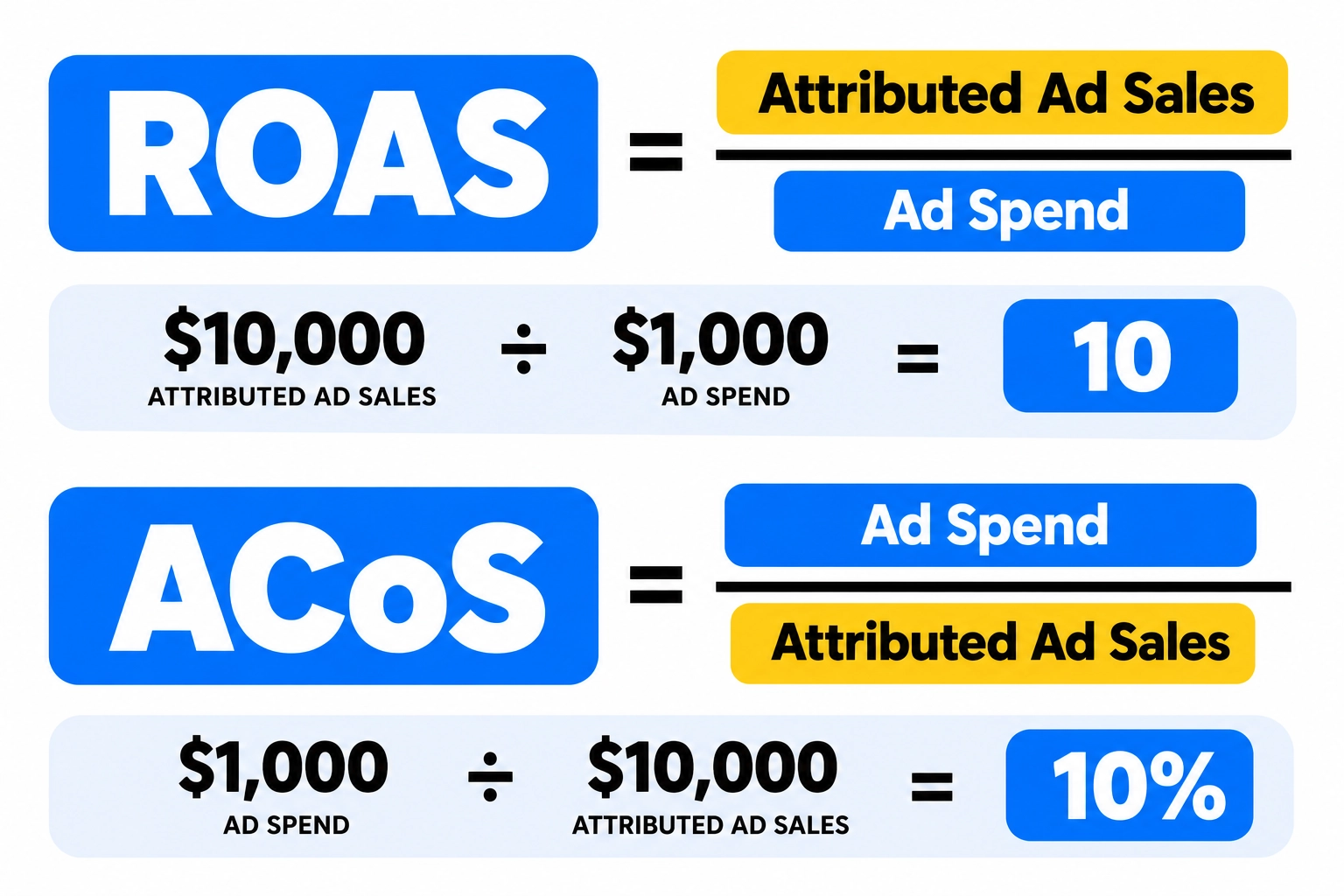
ROAS is attributed sales divided by ad spend. Spend $1,000 on ads, get $10,000 in sales that Amazon attributes to those ads, and you have a 10 ROAS. ACoS is the same ratio flipped, so a 10 ROAS equals a 10% ACoS. Both formulas are laid out below if you're newer to the metrics.
The metric counts only the sales Amazon's attribution window connects to an ad click, so everything else your ads produce goes uncounted: organic sales, the ranking momentum they create, the reviews that sales velocity generates, and every purchase from a shopper who saw your ad, thought about it, and searched for your brand three days later on another device.
ROAS answers one narrow question: how efficiently did ad dollars turn into attributed sales? Run a brand on that question alone and you will spend less and grow slower while the dashboard congratulates you.
A 7.5 ROAS was hiding a 1.7 ROAS
Blended ROAS is an average, and averages bury the story.
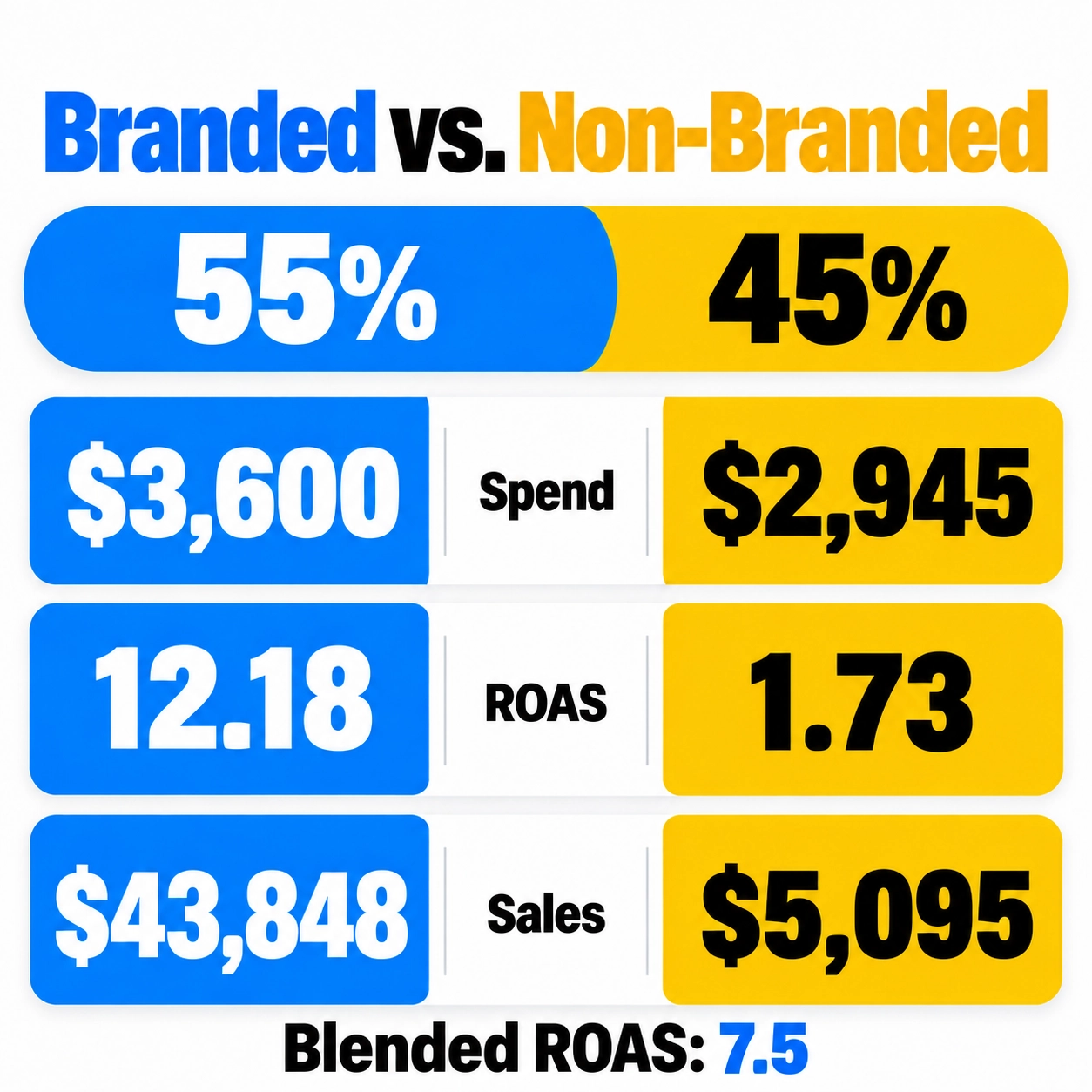
The numbers below come from an advertising audit we ran, figures lightly rounded. In one month the account spent $6,545 on ads at a blended 7.5 ROAS:
- Branded terms (55% of spend): $3,600 on shoppers already typing the brand's own name. ROAS: 12.18. Sales: $43,848.
- Non-branded terms (45% of spend): $2,945 on the searches where new customers actually live. ROAS: 1.73. Sales: $5,095.
$48,943 in sales on $6,545 of spend. A 7.5 ROAS.
A 1.73 ROAS is a 58% ACoS. For almost any margin structure, that means this account acquires every new customer at a loss and earns its entire reported performance on people who had already decided to buy. Paying to re-buy your own customers is what a beautiful blended ROAS most often means, and managing to ROAS makes the split worse every month.
Put simply: optimizing for ROAS ratchets down non-branded spend while steadily increasing branded spend, because that is the direction the metric rewards.
This account parked 55% of its search spend on its own brand name, and across our audits 49-55% is typical. We hold branded spend between 10-20% of total spend on the accounts we manage, and we monitor that percentage daily so a drift toward branded shows up as a trend within days instead of a surprise at month end. The graphic below is the split exactly as it appeared in that audit.
A beautiful ROAS usually means you're underspending
Strong brands earn this problem honestly. When the product and the website are good, demand created off Amazon (Meta ads, press, word of mouth) flows to Amazon on its own. Branded searches and auto campaigns catch that demand with almost no effort, and the account posts great efficiency at low spend. The account got that far because the brand is that good.
The ceiling arrives once that demand is fully captured. Growing past it requires spending into non-branded territory, where ROAS is structurally lower, and an account managed to protect its ROAS will refuse to go there. Flat Amazon revenue sitting next to a fast-growing website is usually this exact mechanism at work.
TACoS counts the sales ROAS can't see
TACoS is total ad spend divided by total revenue, organic included.
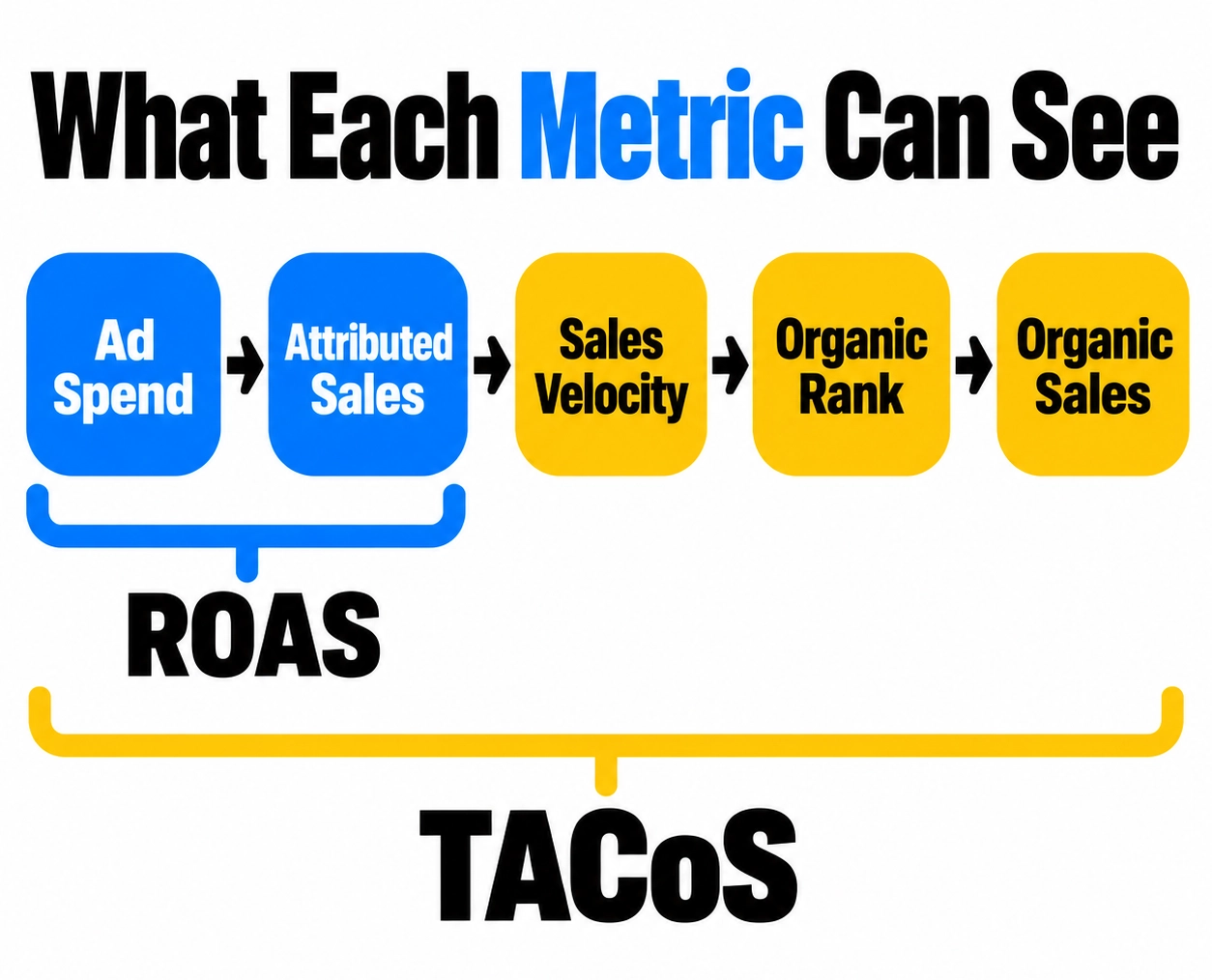
On Amazon, ads and organic feed each other: ad-driven sales raise velocity, velocity raises organic rank, and rank produces organic sales that never touch an attribution window. ROAS credits none of it. TACoS captures all of it, which makes it the true signal of what your ad dollars are doing to the business rather than the return on the ad dollars themselves.
A brand can watch ROAS fall while TACoS holds steady, and that pattern is the signature of a healthy scaling account: every new ad dollar is pulling organic revenue up behind it.
So we set targets on TACoS. Pick the number that fits your margin goals and allows an ad spend that matches your growth goals, then manage the account to that. The diagram below shows how much of the loop each metric can actually see.
What happened when we cut ROAS from 10 to 4
Back to the home goods brand.
The account we inherited ran more than 80% of its spend through auto campaigns, and the hero product's listing hadn't been meaningfully updated in years. We restructured to the mix we run across accounts:
- 60-80% of spend on manual keyword campaigns, most of them single-keyword exact match
- 20-40% on manual product-page targeting
- 1-5% left on auto campaigns, kept purely for keyword discovery
We also redesigned the hero SKU's listing page around conversion.
Then we raised spend.
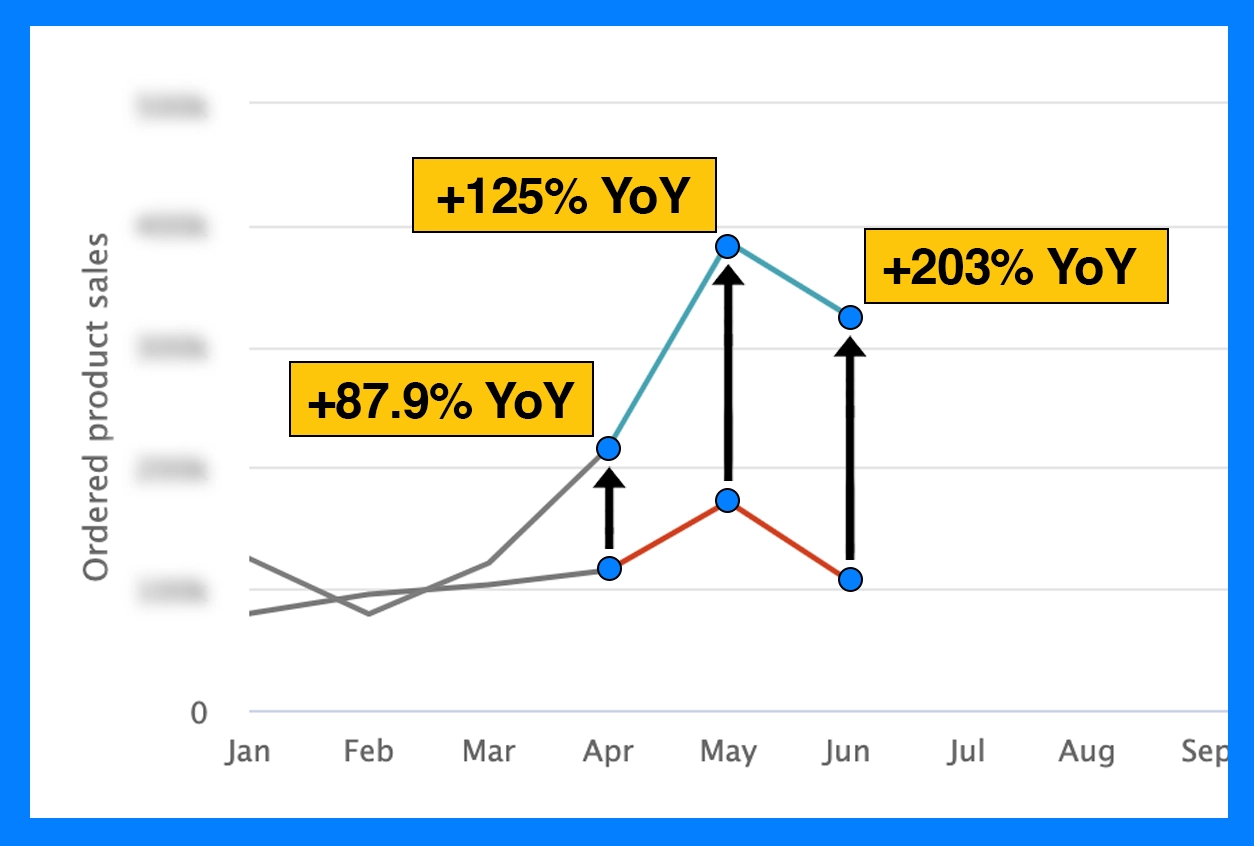
In month one, ad spend went up 89% over the prior month. TACoS moved 1.5%. ROAS actually rose 6.3%. Sales grew 86.6% month over month and 87.9% year over year – the brand's best sales month ever, after months of tracking even with the previous year.
Month two broke the record again at +125% YoY. Month three came in at +203%. The chart below plots both years month by month; the point where the two lines separate is the month we started (April).
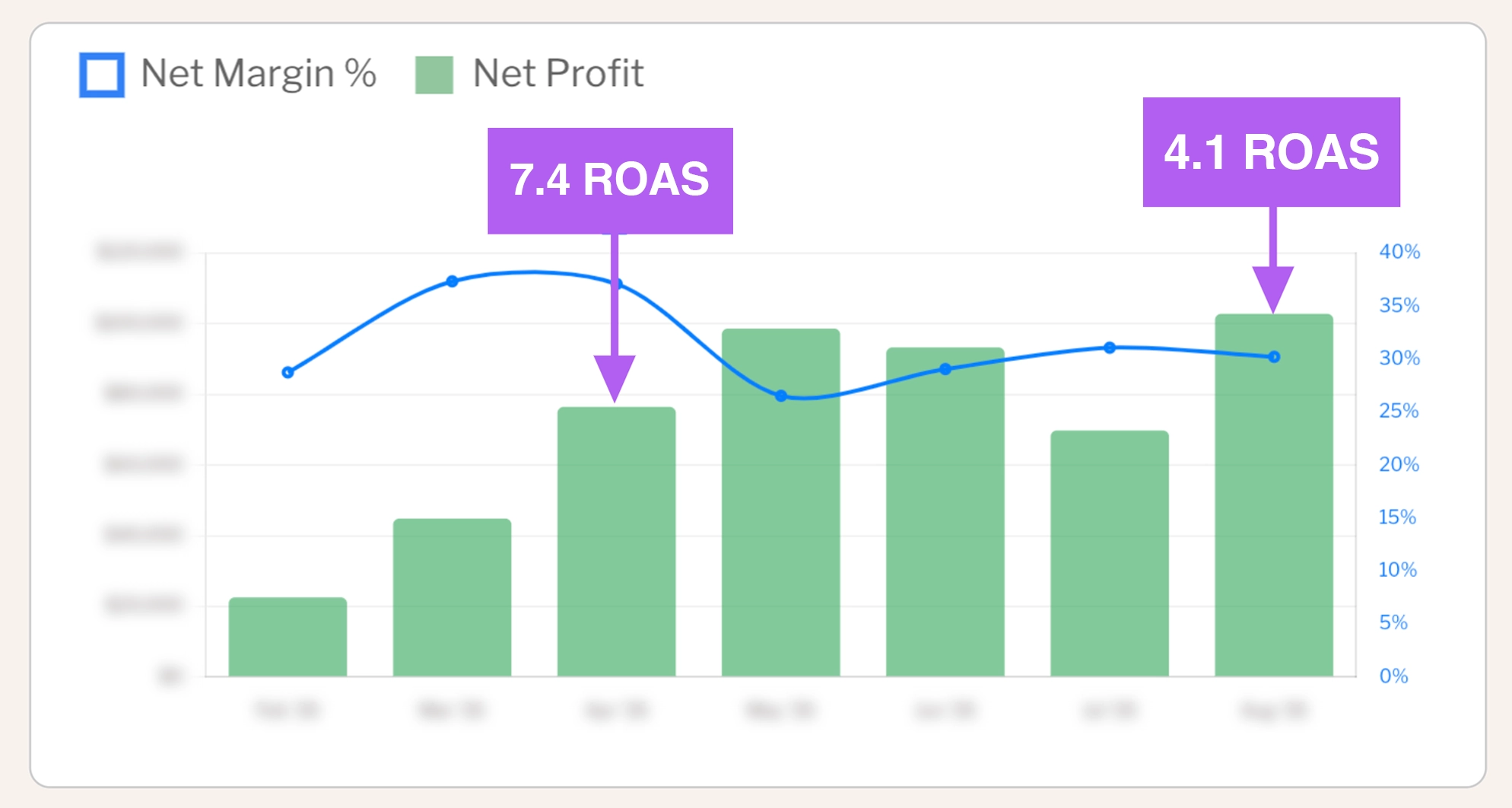
Over the following months we kept pushing spend into new-customer territory, and ROAS drifted from 10 down to 4, exactly as planned. TACoS stayed under 10% the entire time, the brand lost six points of ROAS, and they made more money.
The chart below shows how this account recently hit it's highest ever month for net profit while ROAS was at a near record low 4.1.
Doesn't a profit-focused brand want a high ROAS?
Even then, ROAS is the wrong goal, because the same mechanics apply. An account managed to a ROAS target drifts toward branded spend and away from anything that builds the business, whatever the owner intends.
A brand whose goal is profit should lower its TACoS target instead, and watch two numbers while doing it: profit margin and total profit dollars. Cutting spend to push ROAS up usually shrinks both. The spend that gets cut was also producing organic lift and new awareness, sales that never appeared in the ROAS column, and when that spend disappears those sales go with it. ROAS improves, revenue falls, and the brand ends the month with a prettier ratio and less money.
Managed on TACoS, the same brand tightens deliberately: a lower TACoS target, a leaner account, and month-end profit that actually rises. We manage accounts with exactly that posture. The goal is always maximum progress toward your objective at your appetite for spend; the TACoS target moves with the objective, and the metric stays the same.
How to set a TACoS target
- Know your true margin after Amazon fees, per product. Most brands we audit can't produce this number on request, and every target depends on it.
- Pick your posture. Extracting profit, holding steady, or buying growth. Your TACoS target is the share of revenue you're willing to reinvest given that choice.
- Cascade it. An account-level TACoS target means little until it's translated into campaign-level targets. Otherwise the blended number hides things the same way blended ROAS does.
If your ads are managed to a ROAS goal today, ask your team for the branded vs. non-branded split. If nobody can produce it within a day, the account is being graded on a blended metric that is most likely hurting your brand.
Find out what your ROAS is hiding
For brands doing $100K+ per month on Amazon, we run this analysis as a free advertising audit: branded vs. non-branded performance, product-level TACoS, placement economics, and the spend producing nothing at all, with every number verifiable line by line in your own reports. In most audits, the waste we find pays for the work several times over before any growth even starts.
Unlock Your Amazon Potential
%20(1).avif)
Continue Reading

Amazon DSP Video & Display Ads: Dimensions & Specs
