
How to Remove Resellers From Your Amazon Listing
.png)

A Reseller Took Your Buy Box With a Lower Price. Here's Every Option You Have.
You check your Amazon listing and the buy box belongs to someone else. A seller you've never heard of is offering your product below your price. Your sales slow down, your ad spend is now feeding their sales, and you have no idea who they are, where they got your inventory, or how much of it they're holding.
We had this exact conversation with a client recently. An unknown reseller showed up on their listing with 31 units of a $170 product, priced under the brand's own offer at just $150 (12% below their price). The question they asked is the one every brand asks in this moment: what can we actually do about it?
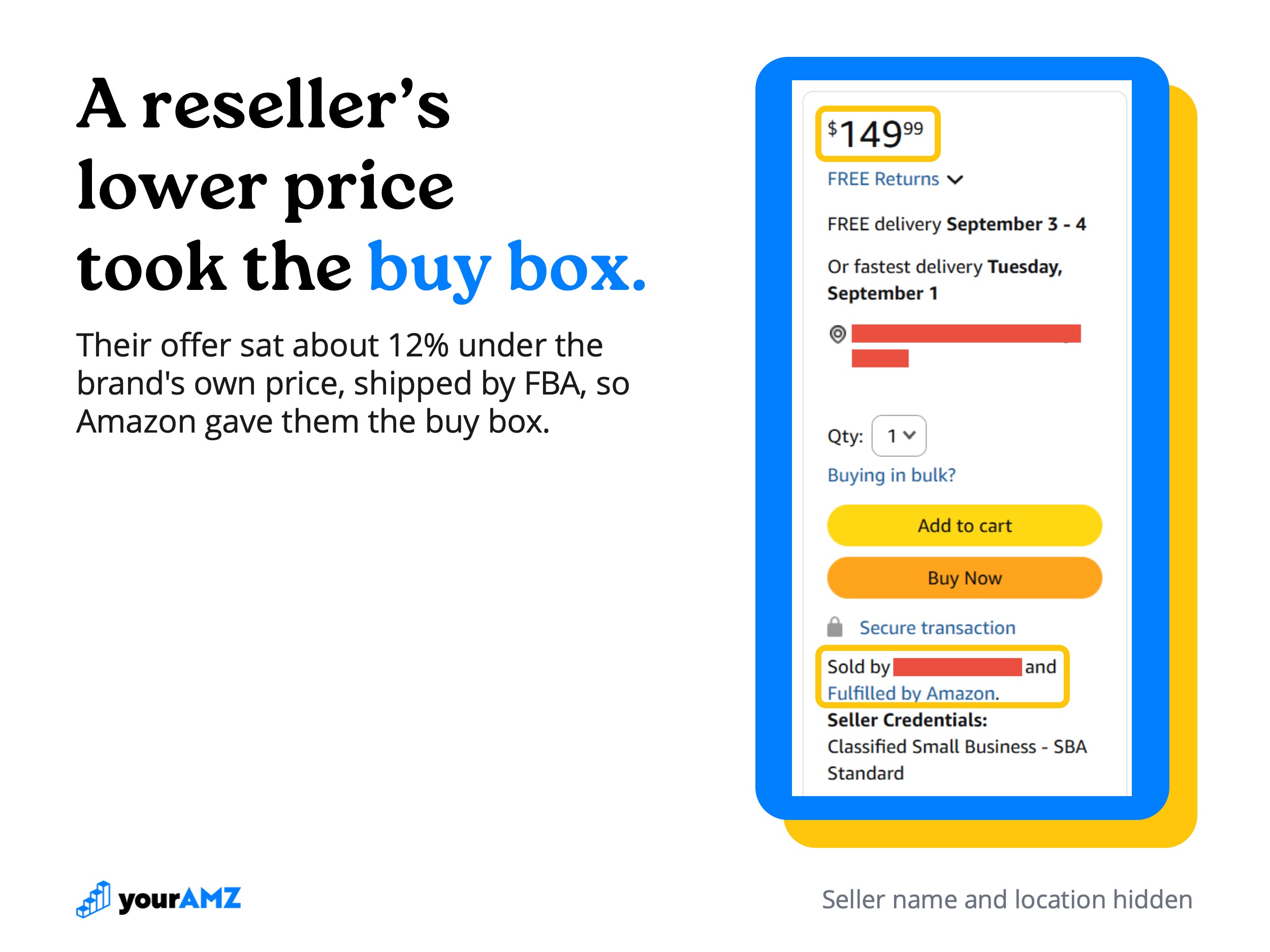
This can be a difficult situation to deal with, but you have options. Every option has a cost, a success rate, and a right time to use it. We've worked through this situation with a lot of brands, and the options below are the full set: first for removing the reseller in front of you, then for making sure the next one never shows up.
Part 1: Dealing With the Reseller on Your Listing Right Now
These are ordered from cheapest to most expensive. Work down the list in order. The cheap options solve the problem more often than you'd expect.
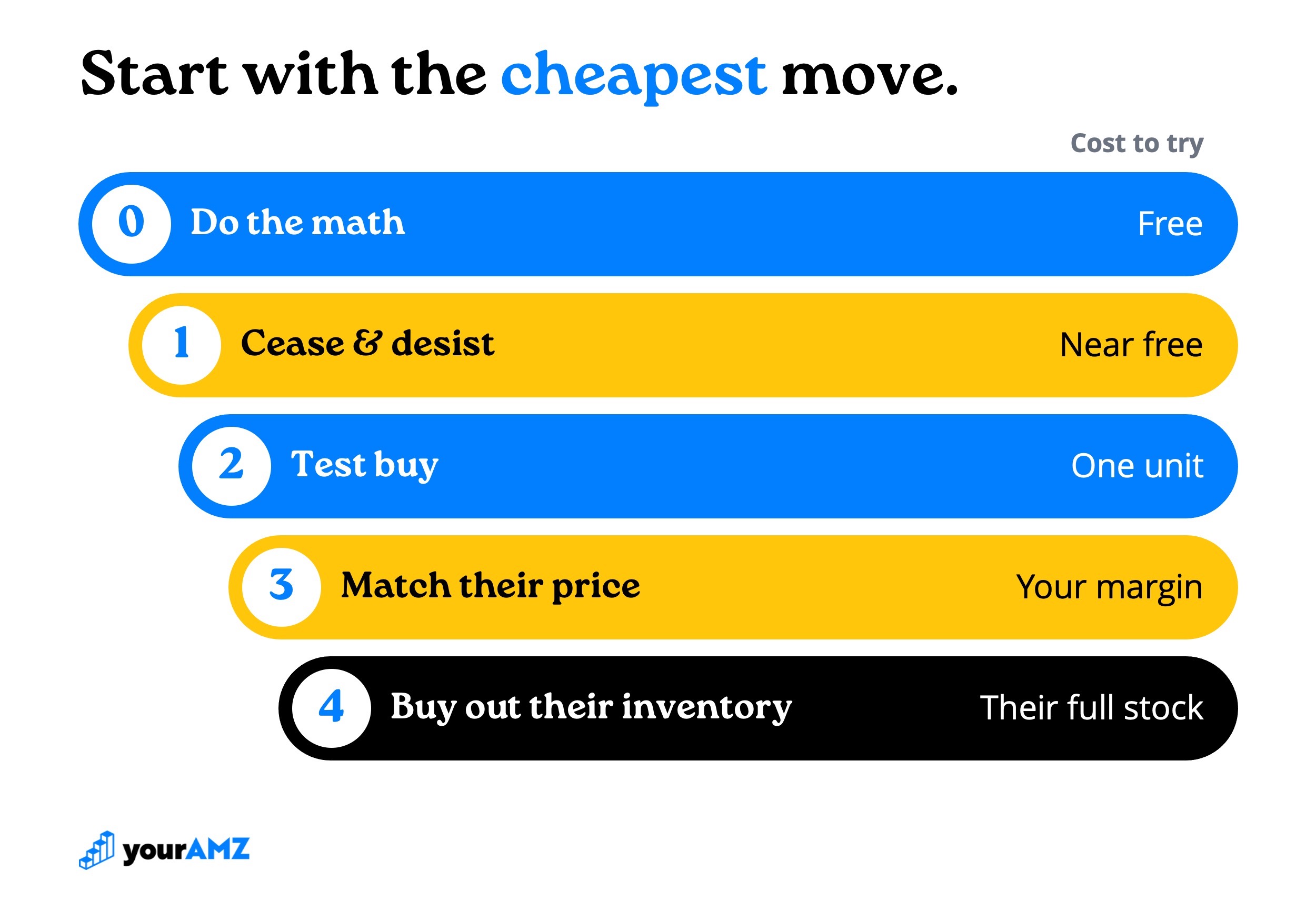
Option 0: Do the math first
Before you spend a dollar or an hour fighting, figure out what this reseller actually costs you.
If they're a retail arbitrage seller who found your product on clearance, they might have a dozen units and no way to restock. They'll sell through and disappear on their own. In that case, everything else on this list costs more than the sales you'd lose by waiting.
In a different client's case, a reseller popped up with 6 units of a $430 product. They sold through within 24 hours on their own. Any action the brand took (a letter, a test buy, a price change) would have landed after the offer was already gone. Run the numbers before you react.
The math also runs the other way. When a reseller holds the buy box on a product that drives your account, waiting costs you nearly every sale on it. One of our clients had a reseller sitting on the buy box of a key product, and daily sales on that product drifted down to near zero over about three weeks. Within about a week of winning the buy box back, the same product was selling almost $4K per day. The chart below shows the drop and the rebound on that one product.
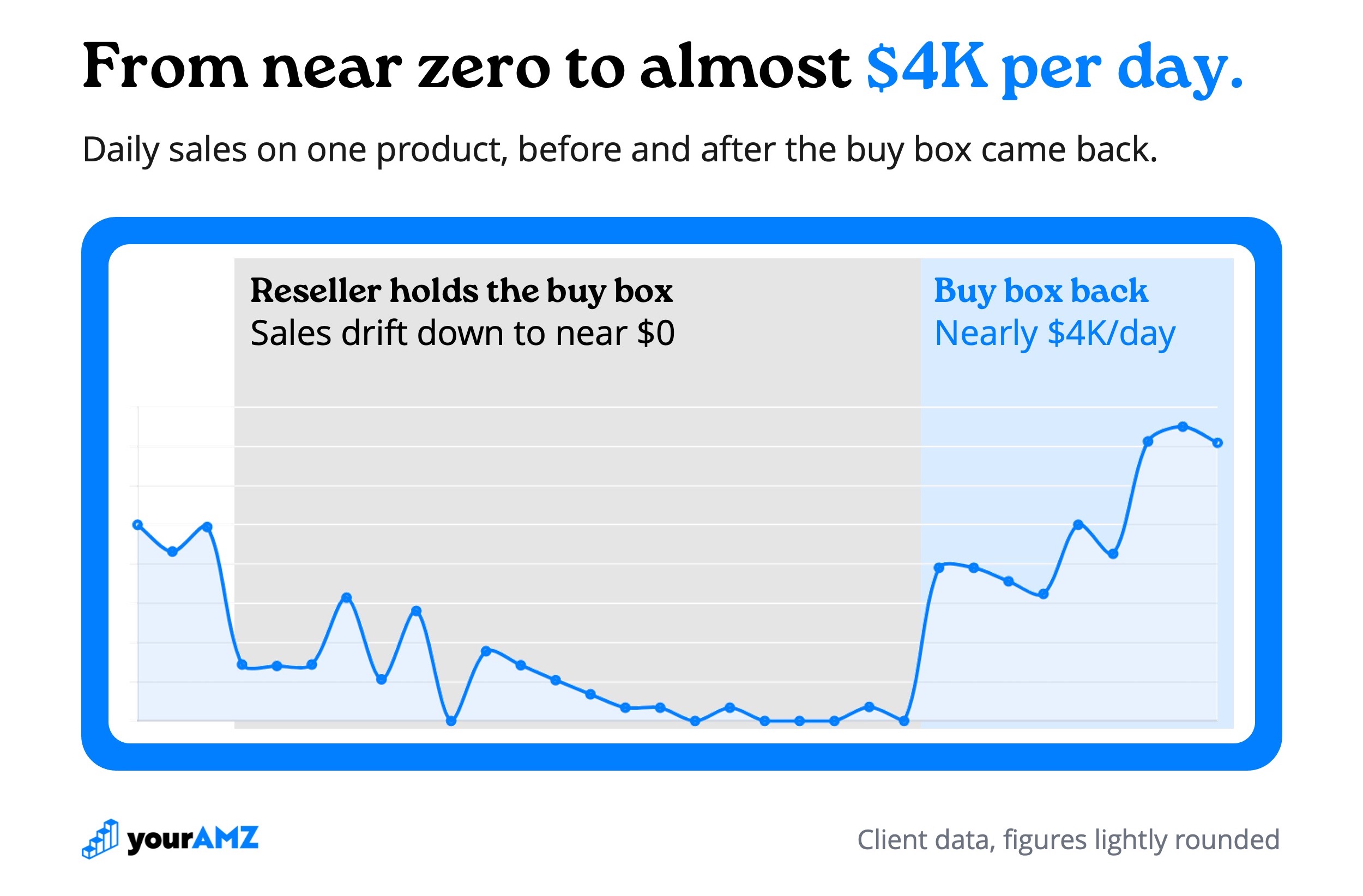
When waiting it out is the right move: small quantities, no sign of restocking, a reseller with a thin or generalist storefront.
The risk of waiting: you're guessing at their inventory. If they restock, you've given them a head start.
Option 1: Send a cease & desist (C&D) letter
A C&D is nearly free, and it could scare off your reseller, especially if they are small with only a few units and little to gain from a fight. They don't know whether your threat has teeth, and for a thin profit on a handful of units, they may just take the inventory down.
Others will ignore it, and legally speaking, many of them can. If someone bought your product legitimately, US law (the first-sale doctrine) generally lets them resell it. A C&D without a real legal theory behind it is a bluff.
It's still worth sending. The cost is close to zero and it can work on small sellers with little to gain long-term. If you want your C&Ds to carry actual weight, the authorized reseller program in Part 2 is what turns the letter into something enforceable.
When it's the right move: almost always. Low cost, real success rate against small sellers.
The risk: essentially none, beyond letting the reseller know you've noticed them.
Option 2: Test buy + condition complaint
Buy one unit from the reseller. You're doing two things at once.
First, you're inspecting the product. If it arrives damaged, repackaged, missing warranty materials, or otherwise different from what your listing promises, you can report the seller through Brand Registry for selling a product that doesn't match the authorized condition. In our experience this is often the fastest route to getting an offer removed. Amazon takes condition complaints seriously when a brand files them with photo evidence.
Second, you're gathering intelligence. The unit's lot code or batch number can tell you where their inventory came from: which distributor, which retail partner, which wholesale account. Hold onto that. You'll use it in Part 2.
When it's the right move: almost always, in parallel with the C&D. One unit costs you their sale price and gives you both a potential takedown and a trace on the leak.
The risk: the unit arrives in perfect condition and there's nothing to report. You're out the cost of one unit and you still learned where it came from.
Option 3: Match or undercut their price
If the gap is only a few dollars, matching their price is often worth it. You win the buy box back (or at least rotate into it), their sales slow down, and their money sits tied up in inventory that isn't moving.
Undercutting is the aggressive version. Price below them and they have two choices: race you to the bottom or sit on dead stock. Small arbitrage sellers either have to liquidate and leave or re-price even lower. If they re-price even lower, they will sell through their inventory faster.
Matching has a tradeoff. It suppresses their offer but keeps it alive, so you share the listing with them until they sell through or give up. And if they're priced 20% or more below you, matching means giving up serious margin and sending repricing signals across every channel you sell on. That's rarely worth it for one reseller.
When it's the right move: small price gaps, when you want the buy box back immediately while other options play out.
The risk: margin erosion, and a reseller who's content to sit at the matched price indefinitely.
Option 4: Buy out their inventory
Purchase everything they have and end the problem today.
This works best against FBA offers, because FBA inventory counts are real: what they show is roughly what they have. Buy it all and the offer is gone.
FBM offers are a different story. An FBM seller can display 3 units, sell out, and quietly relist 3 more, indefinitely. You have no visibility into their true stock. If an FBM offer shows a single unit left, buy it and watch. If the offer never comes back, you're done for the cost of one unit. If it does come back, you've learned they have deeper inventory and this option is off the table.
When it's the right move: FBA offers with small, visible quantities, where the buyout cost beats the margin you'd lose in a drawn-out fight.
The risk: on FBM offers, you can end up buying your own product back at retail, over and over, while they restock out of view.
Part 2: Making Sure the Next Reseller Never Shows Up
Everything in Part 1 is reactive. Remove this reseller and another can appear next quarter, because the conditions that let them in haven't changed. These four moves change the conditions. We recommend them in this order.
Build an authorized reseller program + MAP policy (start here)
This is the foundation of any real prevention strategy, and it's what powers Part 1.
Most C&Ds are bluffs because of the first-sale doctrine: anyone who buys a genuine product can generally resell it. Courts recognize two exceptions:
- Material difference. The resold product differs from the authorized version.
- Quality control. The seller can't meet standards the brand enforces (packaging, batch codes, storage).
Your warranty is the easiest way to create a material difference. If it's only valid for purchases from authorized resellers, the unauthorized unit really is a different product. Yours comes with a warranty and theirs doesn't.
For that to hold up, three things need to exist before any dispute:
- A documented authorized reseller program defining who's in it.
- A warranty that references it, with the limitation shown where buyers see it (listing, packaging, warranty card).
- A MAP policy your authorized sellers agree to.
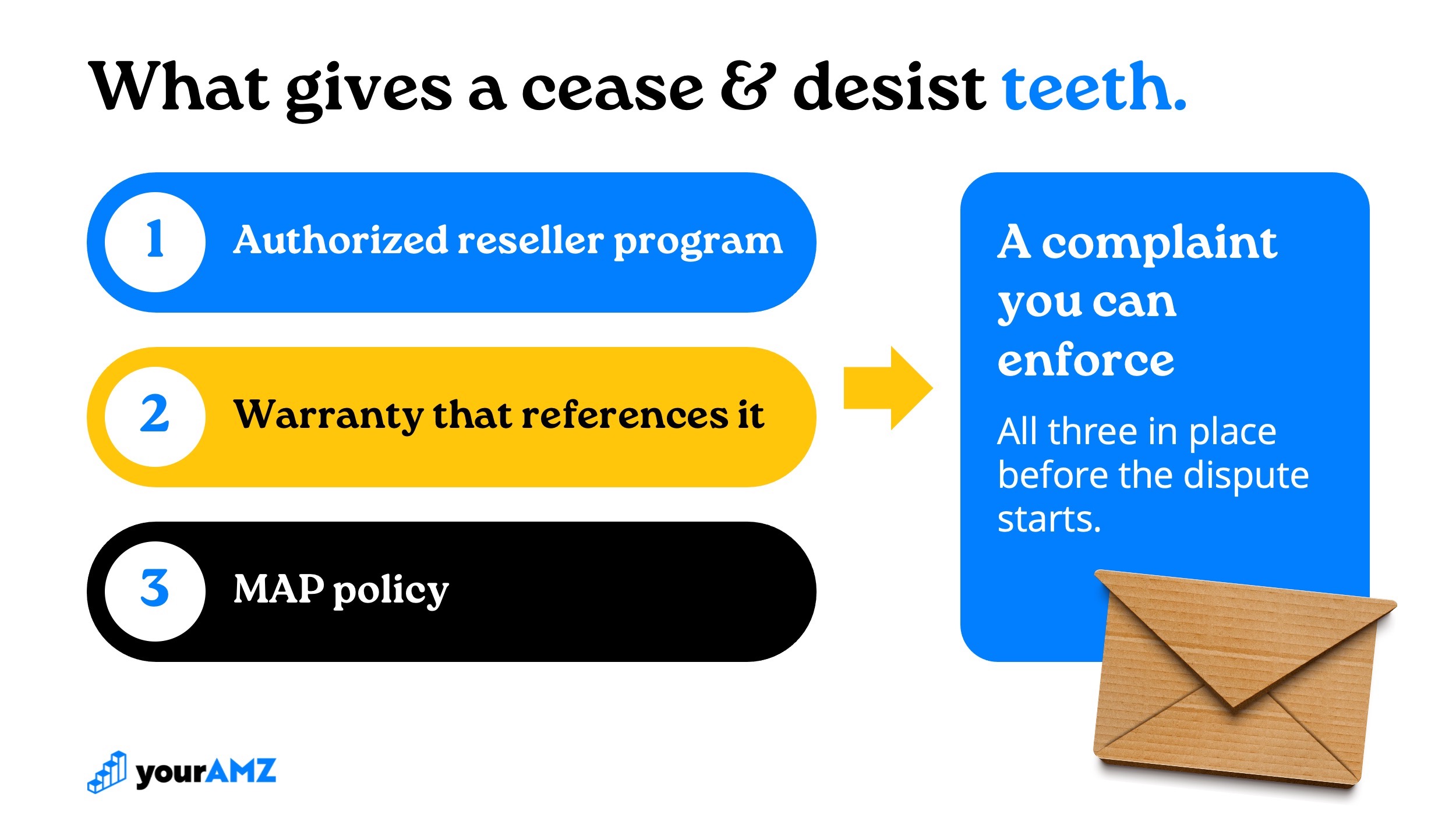
This is exactly how OtterBox operates, and it's a large part of why their enforcement holds up. As one of the most resold brands on Amazon, OtterBox has spent years fighting unauthorized sellers at scale, and their warranty-based program is the widely cited example of this approach working.
Two cautions: MAP only covers the price a seller advertises, and a policy you announce on your own is far safer legally than a pricing agreement you sign with sellers. Have a lawyer draft it for your business. And be realistic on outcomes: this gives your complaints real legal weight, but courts don't always order removal. Most resellers fold long before it gets that far.
Trace the leak and plug it
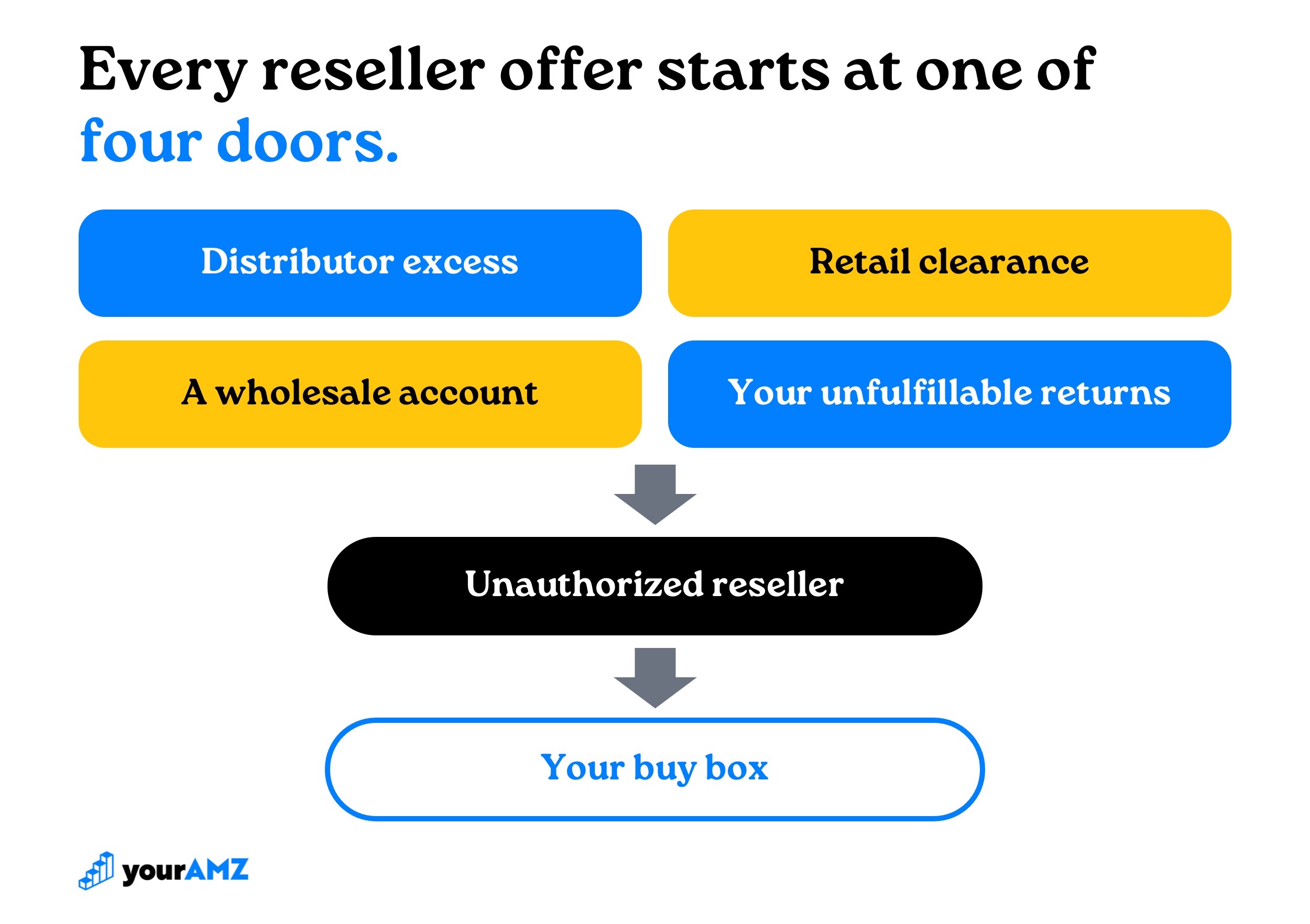
Every reseller got your product from somewhere:
- a distributor dumping excess
- a retail partner's clearance rack
- a wholesale account quietly violating its terms
- your own customer returns on Amazon
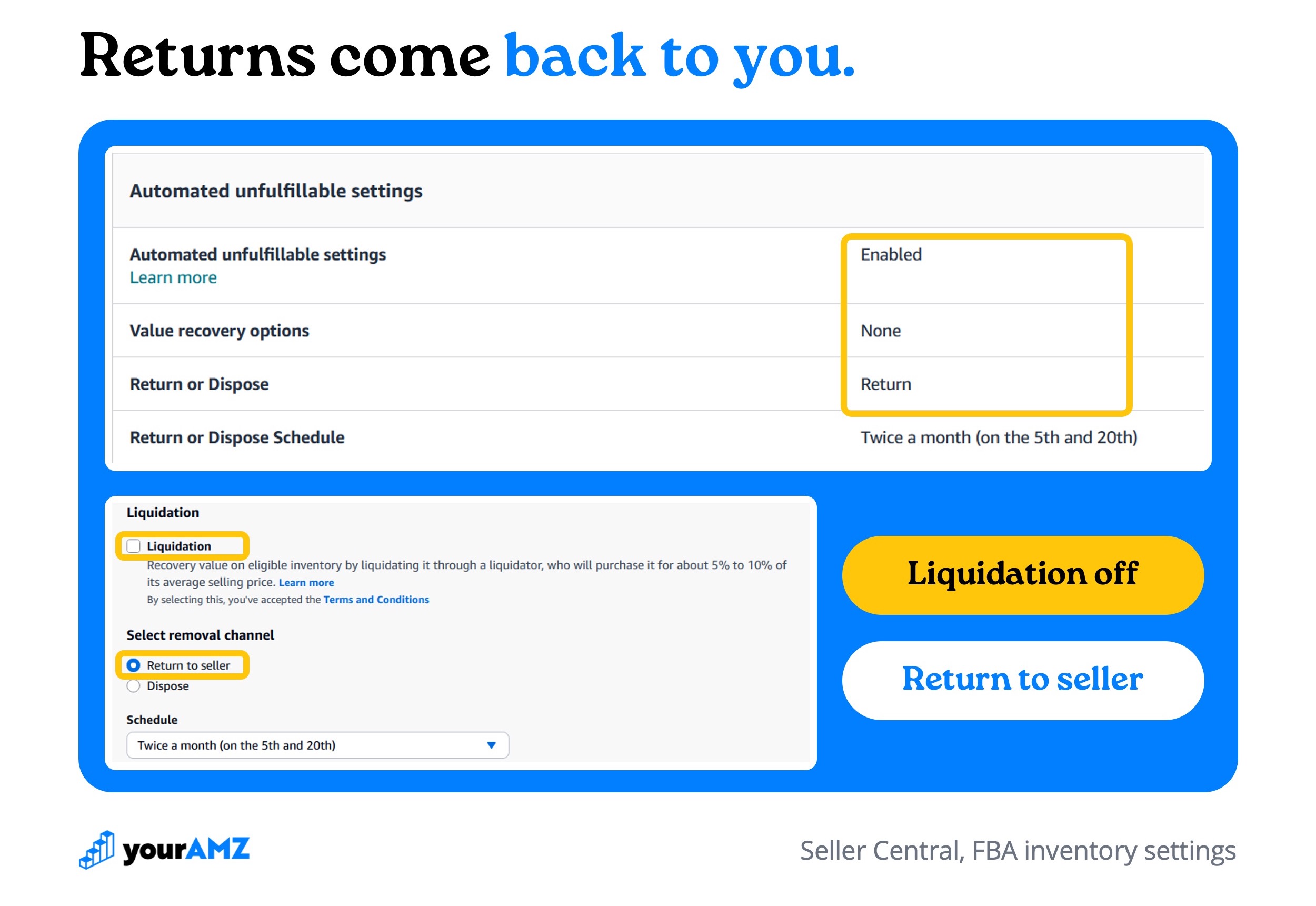
The last one is the easiest to miss. When a customer returns a unit Amazon can't resell, it lands in your unfulfillable inventory. If you haven't told Amazon what to do with those units, they can end up liquidated, sold in bulk to buyers who resell them, sometimes right back onto your listing below your price. In your FBA inventory settings, turn on automated unfulfillable settings, leave Liquidation unchecked, and set the removal channel to Return to seller so those units ship back to you.
This is where the lot code from your Part 1 test buy pays off. Check it against your shipment records and you can often identify exactly which account the inventory leaked from. Then you make a phone call, tighten a contract, or cut off a channel, and the supply feeding unauthorized resellers dries up at the source.
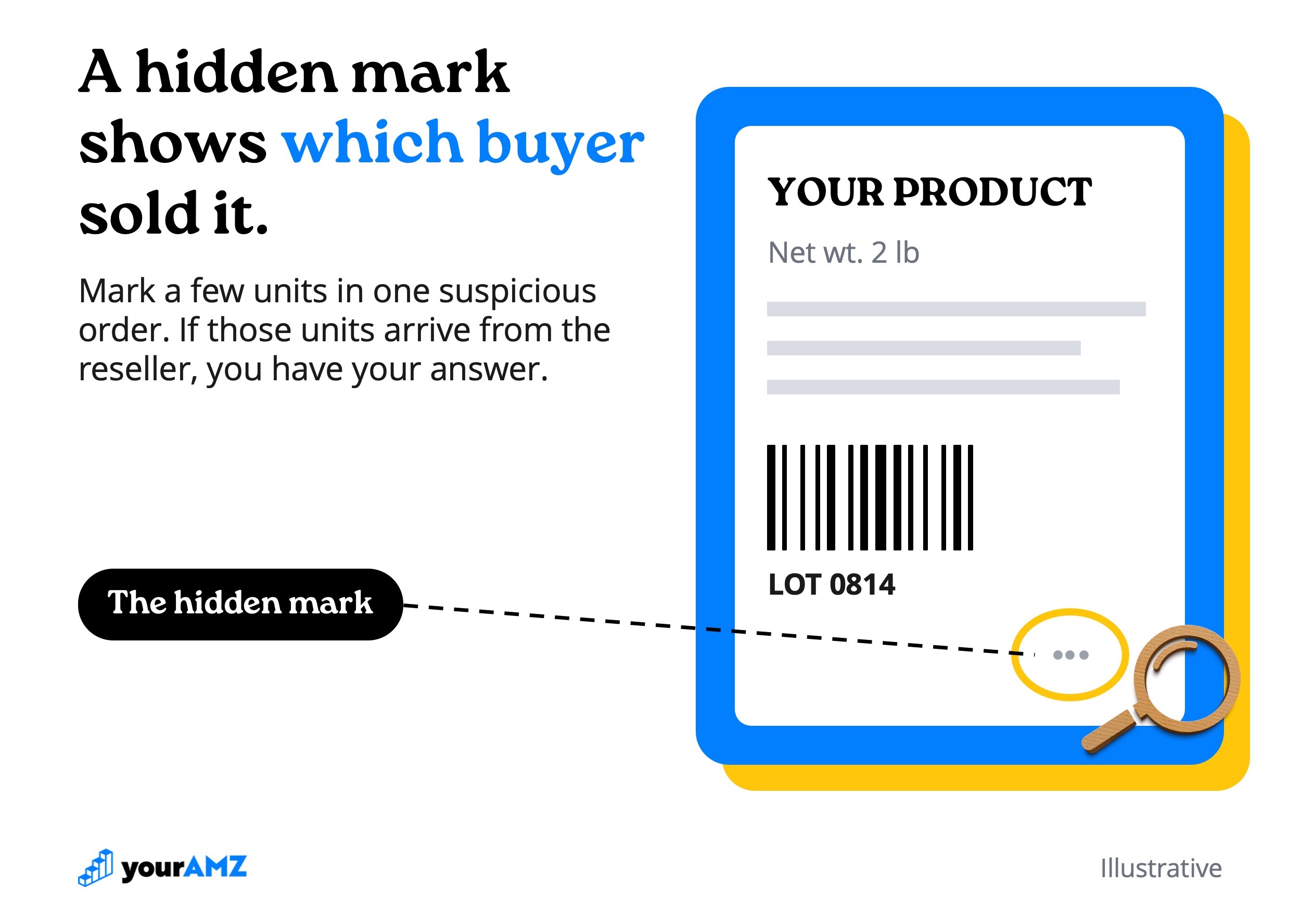
A lot code has a limit, though. If that lot shipped to ten accounts, the code narrows it to ten. When that happens, mark the inventory yourself. One of our clients had been dealing with a reseller on their listings, so when a new wholesale customer's order raised red flags, they had their production team add a small, unique, hidden identifier to the labels on some of the units in that order. Once the order shipped, they bought those products from the reseller on Amazon. The marked units arrived, which confirmed exactly which buyer was feeding the reseller. The brand sent a cease and desist and stopped shipping to that buyer.
All of this depends on tracking which lots ship to which customers. Larger brands usually do. If you don't today, start now. Without those records, you can remove individual resellers forever without ever finding out where they're coming from.
Expect the same buyer to try again. That same client sold to a US company one year and an overseas one the next, and both times the product ended up with the same reseller on Amazon. The second order raised enough red flags that the brand required payment up front, and the buyer paid it, so payment terms alone won't screen them out. Before you approve a new wholesale account, compare its resale certificate or tax ID against the accounts you've already cut off.
Differentiate your Amazon offer
Create Amazon-exclusive versions of your product (multipacks, bundles, a version with an included accessory), each with its own UPC and its own listing.
This works because unauthorized resellers list against the ASIN tied to your product's standard UPC. If your traffic, reviews, and ad spend all live on your exclusive bundle listings, the reseller is stuck on an outdated listing page that gets no free traffic, while your unique offers are untouched. They can't join your bundle listings, because they don't have your bundle.
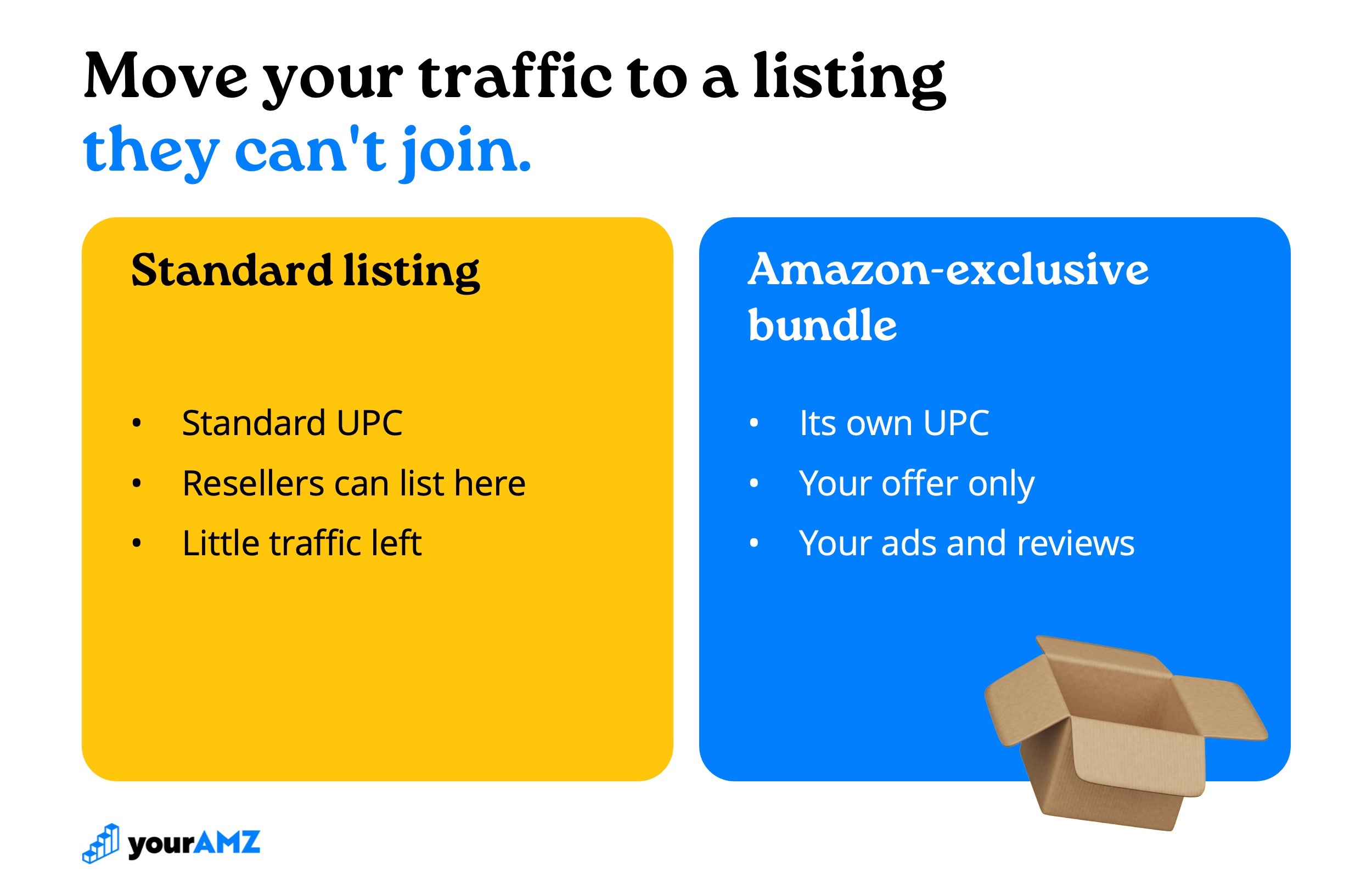
The product they bought can no longer compete with the product you sell.
Amazon Transparency (the last resort)
Transparency is Amazon's serialization program: every unit carries a unique code, and Amazon blocks any offer that can't provide valid codes at fulfillment. It's the only Amazon-native tool that blocks unauthorized offers before they sell.
We put it last because enrollment covers every unit of the product, whatever channel it ships to. Every unit you produce, including the ones headed to retail, wholesale, and your own site, has to carry a code, because Amazon has no way of knowing which units will eventually reach the platform through returns, resale, or FBA. That means changing your packaging or labeling operation across your entire business to solve a problem that exists on one channel.
For a brand with a chronic counterfeit or diversion problem, that tradeoff can be worth it. For a brand dealing with one reseller and 31 units, it isn't.
The Framework, Start to Finish
When a reseller takes your buy box: do the math first, because they may not be worth fighting, and weigh it against what the buy box earns you when you hold it. If they are worth fighting, start cheap: send the C&D and place a test buy the same day. Use the price lever if the gap is small, and consider a buyout only on FBA offers where the inventory is visible. Then, whatever happens with this reseller, fix the conditions that let them in: build the authorized reseller program that gives your future C&Ds teeth, trace the leak using the lot code you collected (or a hidden mark when the lot code isn't enough), set your unfulfillable removal settings, vet new wholesale accounts, and differentiate your Amazon offers so the next reseller has nothing worth listing against. Save Transparency for a chronic problem that justifies relabeling your entire operation.
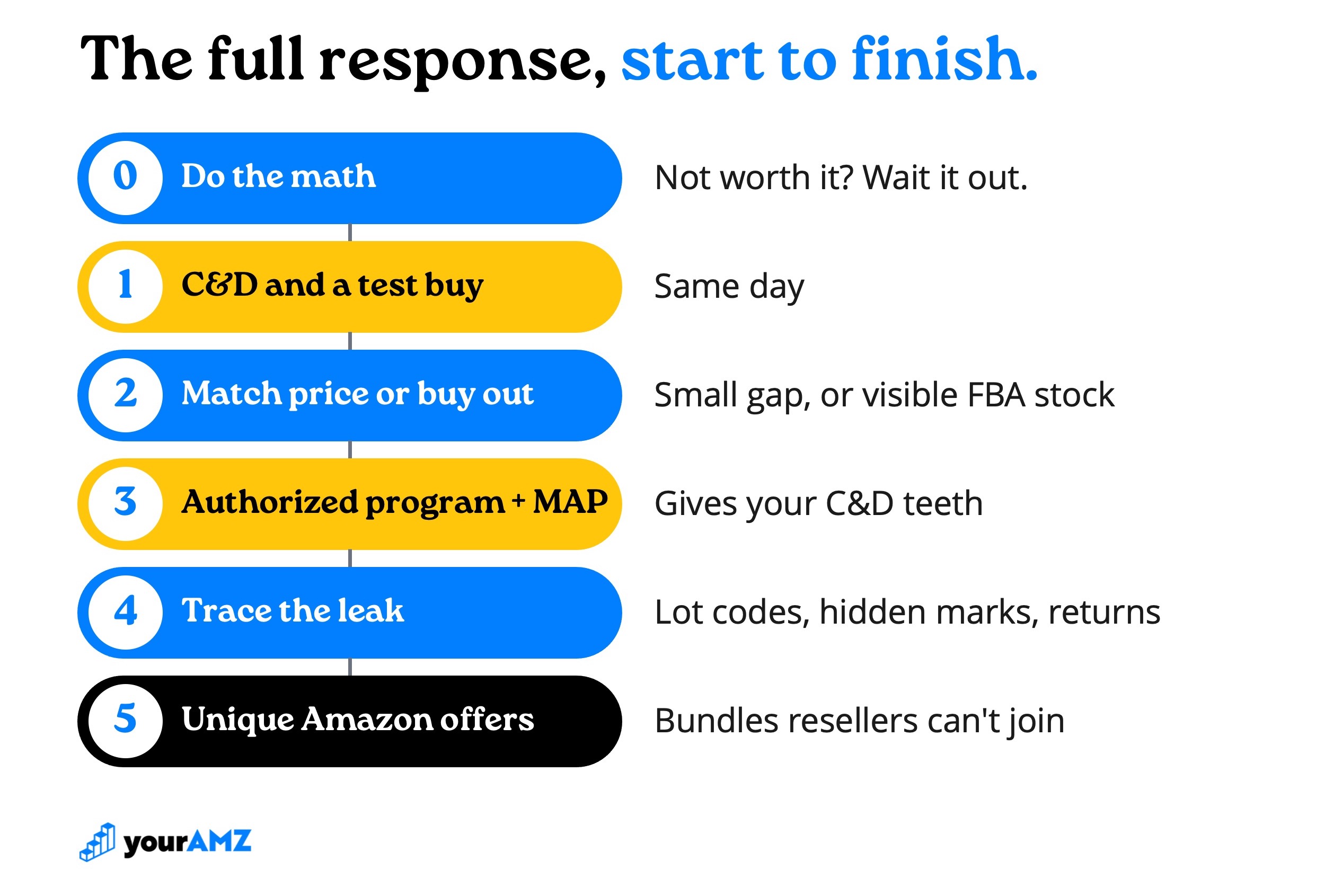
We've guided a lot of brands through this exact situation. The ones who come out ahead match the response to the size of the problem, then fix the leak so they never have to fight it again.
Client examples in this post are anonymized, and identifying details have been changed.
Find the Leaks in Your Ad Spend
A reseller is one way an Amazon account loses sales. Our free Advanced Advertising Audit finds the ones in your ad spend. We go through your account and show you, line by line in your own reports, how much of your ad spend is producing nothing and where it should go instead. It's built for brands doing $100K+ per month on Amazon.
Unlock Your Amazon Potential
%20(1).avif)
Continue Reading

Your Guide to Amazon Product Videos (with Examples)
